


Email
27 Weaver Crescent Kanata,
ON K2K 2Z8
Living Options
Living Options
Experience
About us
Carleton Place Terrace
Forest Valley Terrace
Symphony Kanata
Symphony Orleans
Learn about short-term senior care options, including respite, recovery, and trial stays.
Life doesn't always follow a predictable path, especially as we or our loved ones age. A sudden health event, a caregiver's exhaustion, or simply the desire to test a new living arrangement can create the need for temporary support. That's where short-term senior care steps in, offering flexible, professional care when families need it most.
Key Takeaways:
Short-term senior care is a temporary care solution designed to support older adults for a specific period. Unlike permanent assisted living or nursing home placements, these arrangements typically last anywhere from a few days to several months. This care provides professional support during transitions, recovery periods, or when primary caregivers need a break.
This option takes place in specialized communities equipped to handle various medical and personal needs. Seniors receive 24-hour supervision, medication management, nutritious meals, and engaging activities, all within a safe, supportive environment.
Read more: Top 5 Myths About Assisted Living
How do seniors get the support they need after hospital discharge? Post-operative recovery often requires specialized attention that families can't always provide at home. Short-term senior care offers medical monitoring, physical therapy, and assistance with daily activities during the healing process.
Recovery from hip replacements, cardiac procedures, or other surgeries becomes more manageable in these settings. Staff members trained in rehabilitation help seniors regain strength and independence before returning home. The structured environment also reduces the risk of falls and complications during this vulnerable time.
Respite care gives primary caregivers a temporary break from their responsibilities while ensuring their family member receives quality care. Caregiver burnout is a real concern: studies show that family caregivers often experience high levels of stress and health problems.
Taking a vacation, attending to personal health needs, or simply resting becomes possible through respite services. Many caregivers find that these breaks help them return to their role with renewed energy and patience. The arrangement can last from a weekend to several weeks, depending on the caregiver's needs.
Can you try senior living before committing? Trial stays allow seniors and families to experience community living without making an immediate long-term decision. These test periods help everyone assess whether a particular senior living option feels right.
During a trial stay, seniors participate in activities, meet fellow residents, and experience daily routines firsthand. Families can observe how staff interact with residents and evaluate the quality of care. This hands-on approach removes much of the uncertainty around such an important life decision.
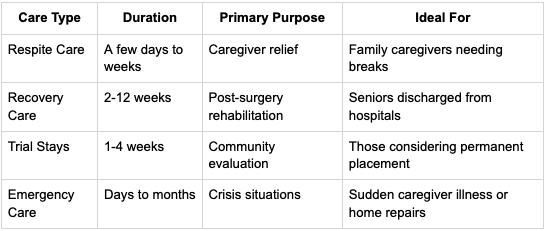
Post-hospital care bridges the gap between medical treatment and home life. These programs focus on rebuilding strength, managing pain, and preventing readmission. Physical therapists, occupational therapists, and nurses work together to create personalized recovery plans.
Many facilities partner with hospitals to provide smooth transitions. Staff members communicate with physicians to ensure medication regimens continue properly. Wound care, mobility training, and nutritional support help seniors heal faster than they might at home alone.
How long can respite care last? Most programs accommodate stays ranging from a single night to three months. Facilities understand that caregiver needs vary; some require weekend coverage, while others need extended breaks for travel or medical procedures.
The same services available to long-term residents are also available to respite guests. Seniors enjoy restaurant-style dining, housekeeping, social activities, and personal care assistance. This consistency ensures that loved ones don't experience a drop in care quality during the temporary arrangement.
Trial stays remove the pressure of immediate decision-making. Seniors can cancel or extend their stay based on their comfort level and experience.
These visits also help families identify specific needs they hadn't considered. Perhaps Mom needs more social interaction than expected, or Dad requires different medication management. Observations during trial periods inform better long-term planning and care decisions.
Read more: How to Talk to Parents About Moving to a Senior Community (Without the Stress)
How much help do short-term residents receive? Care teams provide support with bathing, dressing, grooming, and mobility as needed. The level of assistance adapts to each person's abilities, promoting independence while ensuring safety.
Staff members understand that temporary residents may have different needs than long-term residents. Someone recovering from surgery might need intensive help initially, but gradually become more self-sufficient. Plans adjust throughout the stay to reflect changing capabilities.
Licensed nurses oversee medication administration and monitor health conditions. They coordinate with personal physicians and alert families to any concerns. This professional oversight prevents medication errors and catches potential problems early.
Blood pressure checks, blood sugar monitoring, and wound care happen on schedule. For seniors managing chronic conditions like diabetes or heart disease, this consistent attention maintains stability during recovery or respite periods.
Even temporary residents need meaningful interaction and stimulation. Activities range from exercise classes and craft sessions to movie nights and musical performances. Participation is optional but encouraged for mental and emotional well-being.
Social connection combats isolation and lifts spirits during recovery. Many people form friendships during short stays, which can ease the transition if they later choose permanent residence. The welcoming atmosphere helps newcomers feel at home quickly.
Finding the right short-term stay option starts with assessing your specific needs. Consider the required duration, the level of medical care needed, and location preferences. Most facilities welcome tours and consultations before booking.
Contact communities directly to check availability and discuss your situation. Many can accommodate last-minute requests, though advance planning allows for better preparation. Ask about rates, included services, and any special accommodations your loved one might need.
Bring personal items that provide comfort; favourite photos, clothing, and small mementos help create familiarity. Review medication lists with staff and discuss any dietary restrictions or preferences. The more information you share upfront, the smoother the transition will be.
Respite care focuses on providing caregiver relief while maintaining a senior's current care routine. Recovery care specifically addresses rehabilitation needs following surgery, illness, or hospitalization. Both offer temporary support, but recovery care includes more intensive medical monitoring and therapy services designed to restore function and independence.
Most communities can accommodate stays with 24 to 48 hours' notice, depending on availability. Emergency situations often receive priority placement. For planned respite or recovery stays, booking one to two weeks in advance ensures better room selection and allows staff time to prepare for specific care needs.
Pet policies vary by community, but many facilities recognize the emotional benefits of animal companionship. Some welcome small, well-behaved pets during short stays, while others offer pet therapy programs as an alternative. Always inquire about specific pet regulations, required vaccinations, and any associated fees when booking your stay.
Read more: The Truth About Pet-Friendly Senior Living
Short-term care actually supports continuity of medical treatment. Facility staff coordinate with your loved one's existing physicians and specialists to maintain current treatment plans. They can arrange transportation to medical appointments, administer prescribed medications on schedule, and implement therapy recommendations. This coordination often improves health outcomes during transitions.
Several factors help determine the right choice. Short-term care works well for recovery periods, temporary caregiver absence, or testing a community before committing. If daily caregiving has become unmanageable, safety concerns exist at home, or health needs require constant professional monitoring, exploring permanent options may be more appropriate. Trial stays can help clarify this decision.
The transition to temporary care requires careful thought, but it doesn’t have to be stressful. At Symphony Senior Living, we understand that families need flexible solutions during life's unexpected moments. Our short-term stay programs provide the professional support and comfortable environment your loved one deserves, while you take the time you need to recharge or plan for the future.
From post-surgical recovery to caregiver respite, our experienced teams create personalized care plans that adapt to each resident's unique situation. We welcome you to visit our communities, meet our staff, and see firsthand how we can support your family during this transitional period. Your loved one's well-being remains our priority, no matter how long they stay with us.


We are so grateful to Forest Valley Terrace for providing our mother with a lovely, caring place to live.


Pat said that within a day of arriving, she felt that it was home. She feels that she is really living, and it is finally the beginning of her life.

Lise came to Symphony Orleans two and a half years ago wanting to downsize and start a new chapter in her life.

Helen felt that everything she needed was at Carleton Place Terrace and she would never have to leave, despite her growing needs in the future.
